
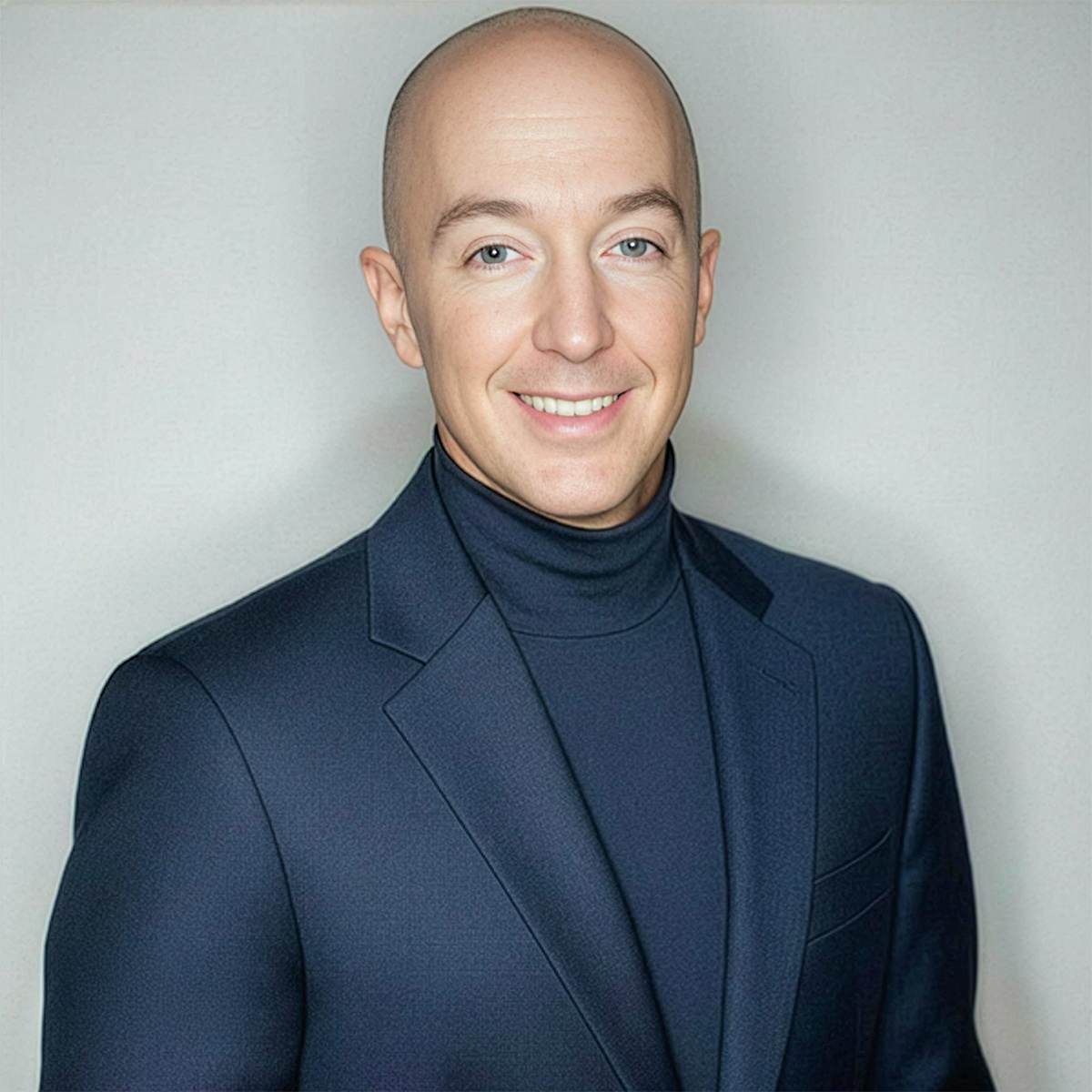
Christofer Holland
← Back to Blog

FROM ANALOG STUDIOS TO AI

How Music Has Always Been About Modeling

From Analog Studios to AI

Long before artificial intelligence entered music production, the industry had already made peace with imitation, abstraction, and modeling.

It just didn't call it that.

Analog Was Never Pure

The myth of "pure" analog music collapses under inspection.

Tape machines colored sound. Consoles imposed character. Rooms shaped tone. Microphones lied — beautifully.

Every signal passed through layers of mediation before it ever reached a listener.

What we now call "warmth" was the result of constraints, noise, distortion, and imperfection — not some untouched human essence.

Analog studios were not neutral containers. They were active participants.

Modeling Didn't Begin With AI

When engineers began recreating hardware behavior in software, no one panicked.

Compressors were modeled. EQ curves were cloned. Reverbs were simulated.

Award-winning mix engineers moved fully in the box without apology.

No one accused them of cheating. No one demanded disclosure. No one questioned authorship.

The industry accepted this instantly because the output still required judgment.

Sampling Already Broke the Spell

Before software emulation, there was sampling.

Loops. Breaks. Borrowed phrases. Recontextualized moments.

Entire genres were built on selection rather than origin.

Dance music didn't hide this — it led with it.

The question was never: "Where did this come from?"

The question was: "What did you do with it?"

AI Is Not a Break. It's a Compression.

AI didn't introduce modeling into music. It compressed it.

What once required: studios, budgets, assistants, time—now happens faster, cheaper, and with fewer intermediaries.

That speed is what unsettles people — not the principle.

The work didn't disappear. It moved downstream.

Authorship Didn't Vanish. It Relocated.

AI produces material. It does not decide what survives.

Selection still rules: editing, rejecting, committing, releasing.

The artist's role didn't vanish. It sharpened.

Authorship lives in choice, not generation.

The Real Discomfort Isn't Technical

The anxiety around AI is not about sound quality. It's about hierarchy.

When more people can generate material, taste becomes visible again.

Judgment can no longer hide behind scarcity.

That's uncomfortable.

This Is the Same Story, Repeating

Analog → digital. Hardware → software. Studios → laptops. Scarcity → abundance.

Each shift produced panic. Each time, authorship survived.

AI is not the end of music. It's the end of pretending that tools were ever the author.

Where This Leaves Us

Music has always been shaped by the tools available.

What mattered was never the tool — it was the human who decided what stayed.

That hasn't changed.

SUNOLICIOUS™
Human. Machine. Manifest.

Artist Bio

I came up in music before everything went fully digital.

I learned recording in analog studios where tape was finite, decisions mattered, and commitment was part of the craft. I worked across multiple eras and cities — Chicago, London, New York — from early multitrack recording and sampling systems through large-format tape and into the digital age that rewrote the industry entirely.

I'm Christofer Holland, a/k/a NOAH®, with more than twenty UK Music Week chart placements as well as Billboard and DJ Times chart entries. My work has crossed underground club culture and commercial dance music, giving me a perspective shaped by both the creative and business sides of the industry.

I didn't arrive at AI as a shortcut. I arrived at it through decades of adapting to changing tools while protecting authorship.

Throughout my career, musicians have always modeled other musicians — singers studying phrasing, drummers internalizing feel, guitarists chasing tone. That's not new. What's new is that modeling has become explicit.

Today, I use AI as part of a creative feedback loop — prompting, responding, refining, selecting, reshaping, and taking responsibility for the final work. Platforms may introduce variation and randomness, but the core decisions — melody, lyrics, emotional direction, arrangement, identity, and what ultimately gets released — remain human.

Any vocals that aren't my physical voice are still extensions of my musical identity: my melodies, my words, my intent, my taste.

The tools evolve.
The authorship doesn't.

SUNOLICIOUS™
Human. Machine. Manifest.

AI Ethics & Creative Statement

SUNOLICIOUS™ is where human artistry meets technological possibility.

My music is shaped by my melodies, lyrics, creative direction, and musical judgment.

AI doesn't replace my artistry — it extends it. It's a tool, not a ghostwriter; an instrument, not a replacement for the artist.

I develop the concepts. I write and shape the songs. I define the sonic identity. I work through an iterative creative feedback loop — prompting, responding, refining, editing, and making the final decisions about what gets released.

AI enters the process as part of a long tradition of musical technology — synthesizers, samplers, drum machines, pitch correction, and amplifier modeling — expanding what an artist can create and how that vision can be expressed.

Every SUNOLICIOUS™ release is developed, curated, and produced under my creative direction. Vocal models, generated textures, and other AI-assisted elements serve the composition, not the other way around.

The technology contributes possibilities. The artist determines the work.

Human first.
Machine second.
The creative vision is mine.